
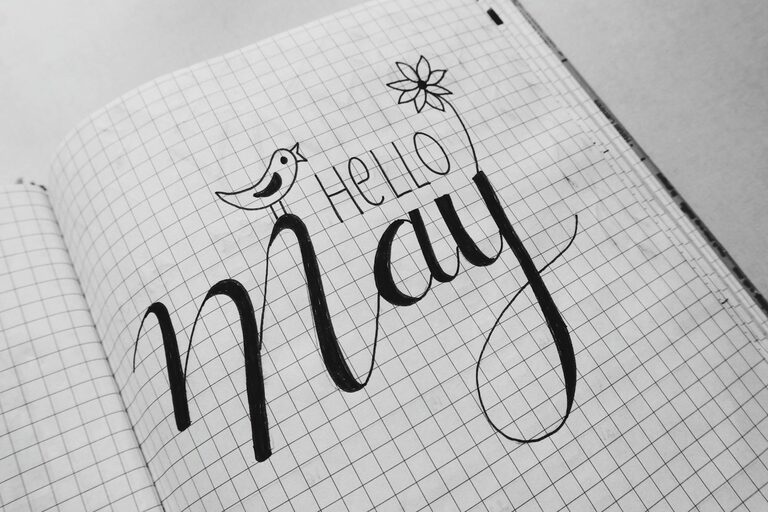
Bullet journaling is a flexible and creative way to organize your life, keep track of tasks, and set goals. Whether you’re new to journaling or looking for a fresh approach to planning, bullet journaling offers a customizable system that fits your needs perfectly. This beginner guide will walk you through the basics, helping you start your own bullet journal with confidence and ease.
What Is Bullet Journaling?
Developed by Ryder Carroll, bullet journaling is a method of using a notebook to combine planning, note-taking, brainstorming, and habit tracking in one place. The beauty of bullet journaling lies in its simplicity and adaptability—there’s no rigid format, so you create your own system.
At its core, a bullet journal uses short bullet points to log tasks, events, and notes. You structure your pages based on what you want to focus on, whether that’s daily to-dos, monthly goals, or creative doodles.
Why Start a Bullet Journal?
– Stay organized: Keep all your to-do lists, events, and ideas in one notebook.
– Boost productivity: Track your habits and prioritize important tasks.
– Flexibility: Design your pages to fit your lifestyle and preferences.
– Mindfulness and creativity: A journal can also serve as a space for reflection and artistic expression.
– Reduce stress: Clear your mind by writing down your thoughts and plans.
Essential Supplies to Get Started
You don’t need many tools to start bullet journaling. Here’s a simple list:
– Notebook: A dotted or grid notebook is popular, but any blank notebook works.
– Pen: Fine-tip pens or markers for writing and drawing.
– Ruler: Optional, for straight lines.
– Colored pens or pencils: For adding color and highlights.
Begin with basic supplies and add more as you discover your style.
Setting Up Your Bullet Journal
1. Index
The index helps you quickly find important pages. Reserve the first two pages of your journal for this. As you add new pages, record their titles and page numbers here.
2. Future Log
A future log is a yearly overview where you note upcoming events, appointments, or goals. Divide two pages into sections for each month and fill it in as needed.
3. Monthly Log
Create a spread for each month. On one page, list the dates and days (e.g., 1–31). On the opposite page, write down monthly goals, tasks, and events.
4. Daily Log
Use daily logs to jot down tasks, appointments, and notes for each day. Write the date at the top and list bullet points below.
Using Bullet Points
Bullet journaling uses simple symbols to organize information:
– Task: Represented by a simple dot (•)
– Event: Open circle (o)
– Note: Dash (–)
– Task completed: Turn the dot into an “X”
– Task migrated: Arrow pointing right (→), meaning moved to another day or list
You can customize these symbols to better suit your needs.
Customizing Your Journal
Part of the fun in bullet journaling is making it your own. Consider adding:
– Habit trackers: Track habits like water intake, exercise, or reading by coloring boxes daily.
– Mood trackers: Record your mood with colors or symbols each day.
– Collections: Themed pages for books to read, movies to watch, or project plans.
– Quotes or affirmations: Inspirational sayings to motivate you.
– Doodles: Drawings to personalize your pages.
Tips for Staying Consistent
– Keep it simple: Don’t worry about making your pages perfect. Simple and functional is better than complex and overwhelming.
– Set aside time: Spend a few minutes each day or week updating your journal.
– Use it daily: Carry your journal with you so you can easily jot down tasks and ideas.
– Experiment: Try different layouts and trackers to see what works best.
– Be patient: Building a habit takes time. Adjust your system as you learn.
Common Mistakes to Avoid
– Overcomplicating: Starting with intricate designs can be discouraging. Focus on basic layouts first.
– Waiting for the perfect setup: Jump in and begin. You can always change your style later.
– Neglecting the index: Without an updated index, it’s harder to find older pages.
– Underestimating time needed: Set realistic goals for updating your journal regularly.
Final Thoughts
Bullet journaling is a fantastic tool for organization and creativity. Starting doesn’t require special skills—just a notebook, a pen, and a little time. As you build your own system, you’ll find it easier to focus on your goals and enjoy the process of planning each day.
Give it a try, and watch how a simple notebook can become a powerful personal assistant and creative outlet all in one!